
Seeing further afield
and
further ahead.
We help farmers and agribusiness to assess climate risk, understand regional crop prospects and more quickly respond to developing climate extremes further ahead.
Seasonal Forecast Subscription
Australian seasonal forecasting and crop prospects
A detailed assessment of the climate factors influencing Australian agriculture, together with regular updates as the season develops.
Maps – Wheat Yield Rankings
Regional crop monitoring and wheat yield rankings
Agromet uses rainfall information from more than 1,000 stations to monitor regional soil moisture and produce national wheat yield ranking maps.
Grain Productivity Changes
Understanding changes in grain productivity
Consultancies on grain productivity and yield changes across Australian agricultural regions, including historical productivity and water use efficiency.
Farm Portfolio Risk
Understanding agricultural risk across a portfolio
Spreadsheet of regional crop production and variability with a mix of properties spread across the grain belt, i.e. agricultural portfolio risk assessment.
Seasonal forecasting and agricultural climate intelligence
Agromet provides seasonal climate forecasts, crop monitoring and agricultural climate analysis to help Australian farmers and agribusiness understand what is happening now, what may be developing and what it could mean commercially.
Built on more than 40 years of agricultural and climate research, Agromet brings together climate data, rainfall patterns, crop information and regional forecasting research developed by Dr David Stephens.
Climate science · Agricultural intelligence · Practical information for industry
Understanding what the climate means for agriculture
Farmers have access to a vast amount of data, weather and climate information. The challenge is understanding what it means for their region, their crops and their decisions. Agromet brings the relevant information together, analyses the different signals and interprets them in an agricultural context.
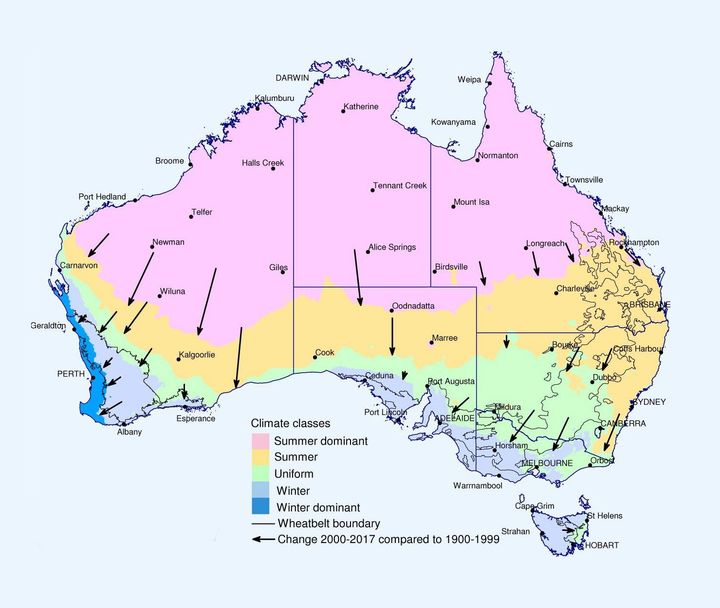
Turning climate information into agricultural insight
Agromet's analysis draws on global and regional climate drivers, Australian climate indicators, rainfall patterns, atmospheric conditions, ocean temperatures, historical analogue years and other climate models, alongside its own forecasting indices and crop monitoring.
The information is assessed in an agricultural context rather than simply presented as raw climate data.
Playing the Long Game
After more than 40 years researching Australian rainfall and agricultural climate, Dr David Stephens identified a new environmental signal that can provide an earlier indication of changing regional rainfall conditions.
The discovery led to the development of Agromet's Long-Lead Index — designed to provide a heads-up about what may be developing before the pattern becomes evident in rainfall itself.
Working alongside the Now-Time Index, it forms part of Agromet's research into regional rainfall patterns across Australia.
Agriculture first
Agromet's focus is on making climate information useful to agriculture.
The objective is to understand the climate signals, assess what they mean for Australian agricultural regions and provide information that can be considered alongside the many other factors involved in farm and agribusiness decision-making.
This agricultural focus is what turns climate information and research into something useful for the people making decisions on the ground.
A focus built on research
Agromet's work has developed through more than 40 years of agricultural and climate research. Dr David Stephens has researched Australian rainfall patterns, crop development, soil moisture, climate variability and agricultural productivity throughout his career.
Through Agromet, he continues to research Australian climate patterns and develop forecasting methods designed to provide useful information for agriculture.
“Professional, credible & scientific
I've been using AMA’s forecasts for many years and have always found the information to be professional and with credible scientific reasoning. It is very useful in making my farming decisions in northern Victoria. It's great to have a long-range forecast to help make difficult, and often expensive, choices.”
- Craig Reynolds, Congupna VIC